Last updated: June 10, 2026. Pricing for every platform below verified directly from each provider’s site.
If you’re running an online business, you’ve probably felt it: one tool for your website, another for email, a third for funnels, a scheduler for bookings, something for your course, plus the connectors holding it all together. Separate logins, separate bills, and integrations that break at the worst possible moment.
An all-in-one marketing platform is the answer to that sprawl — one system that does the jobs of many. This guide explains what these platforms actually are, what to look for, how the leading options compare, and how to choose the right one for your situation. It’s written to help you decide, not to push a single product — though by the end, we’ll share where the strongest value sits and why.
What Is an All-in-One Marketing Platform?
An all-in-one marketing platform is a single software suite that combines the core tools a business needs to market and sell online — typically a website/page builder, email marketing, sales funnels, a CRM or contact management, and often e-commerce, courses, webinars, and automation — into one integrated system with one login and one subscription.
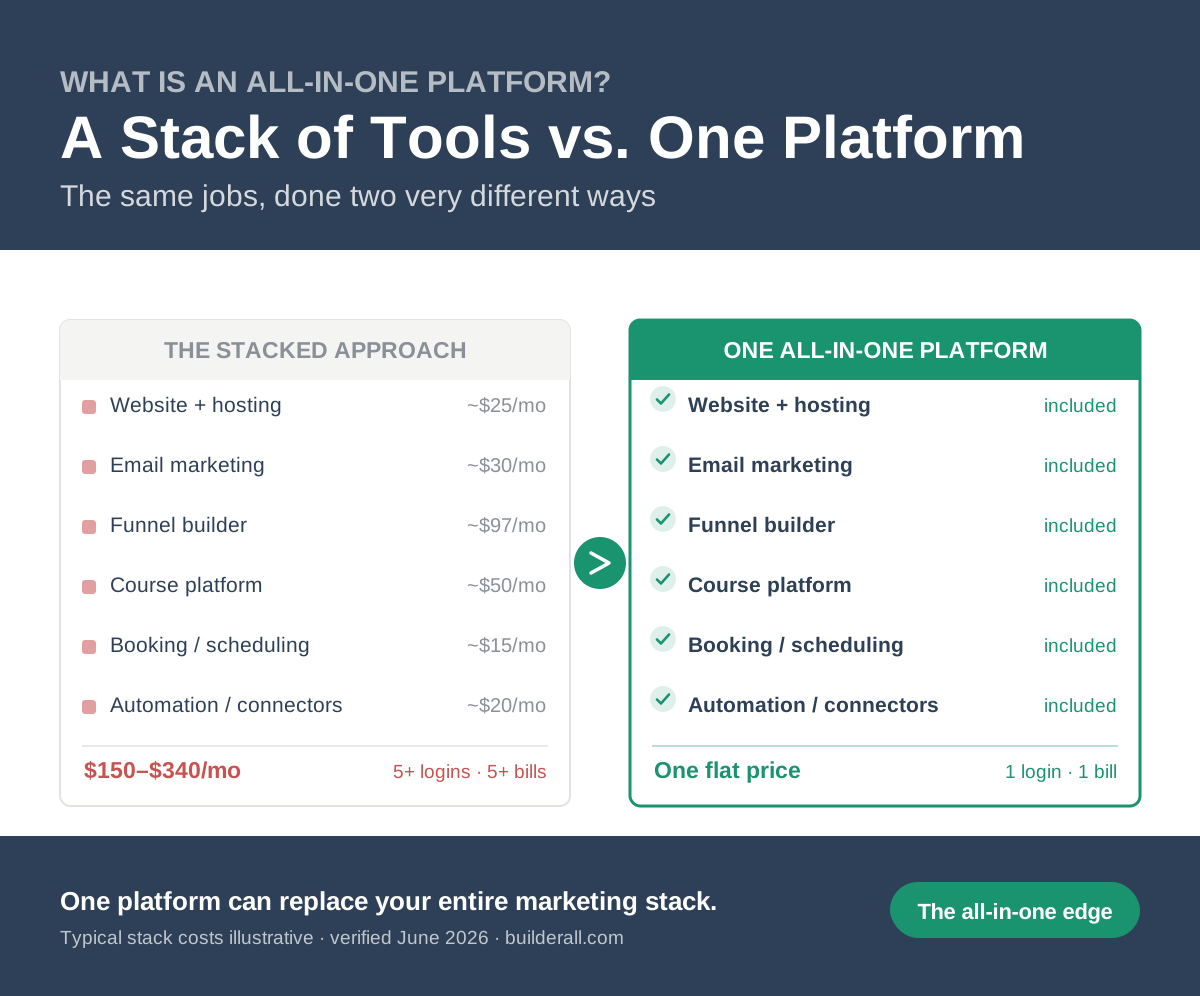
The contrast is the “best-of-breed” or “stacked” approach, where you assemble specialized tools: a dedicated website builder, a dedicated email service, a dedicated funnel tool, and so on. Each individual tool might be excellent, but you pay for each separately and rely on integrations to make them talk to each other.
Neither approach is universally right. The trade-off is depth versus consolidation — and which one wins depends on your business.
Why Businesses Move to All-in-One Platforms
Three pressures push people toward consolidation:
Cost. Separate subscriptions add up fast. A typical solopreneur stack — email tool, funnel builder, website hosting, scheduling, course platform — can run $150 to $340 per month. An all-in-one platform often replaces most of that for a single lower fee.
Complexity. Every tool you add is another login, another billing date, another interface to learn, and another integration that can fail silently. Consolidation reduces the operational overhead of simply keeping your marketing running.
Cohesion. When your pages, emails, checkout, and contacts live in one system, data flows without connectors. A lead who fills out a form is instantly in your email list and CRM, no Zapier required. That integration is the core promise of all-in-one.
What to Look For (The Buyer’s Checklist)
Not all all-in-one platforms are equal. Before choosing, weigh these factors:
Tool coverage. List the tools you actually use today, then check the platform covers them. The most common core set: website/page builder, email marketing, funnels, CRM/contacts, and checkout. Growing needs often add courses, webinars, booking, and chat/messaging.
Depth vs. breadth. A platform can have a tool without that tool being good. Decide which capabilities are mission-critical for you (where you need real depth) versus nice-to-have (where “good enough” is fine).
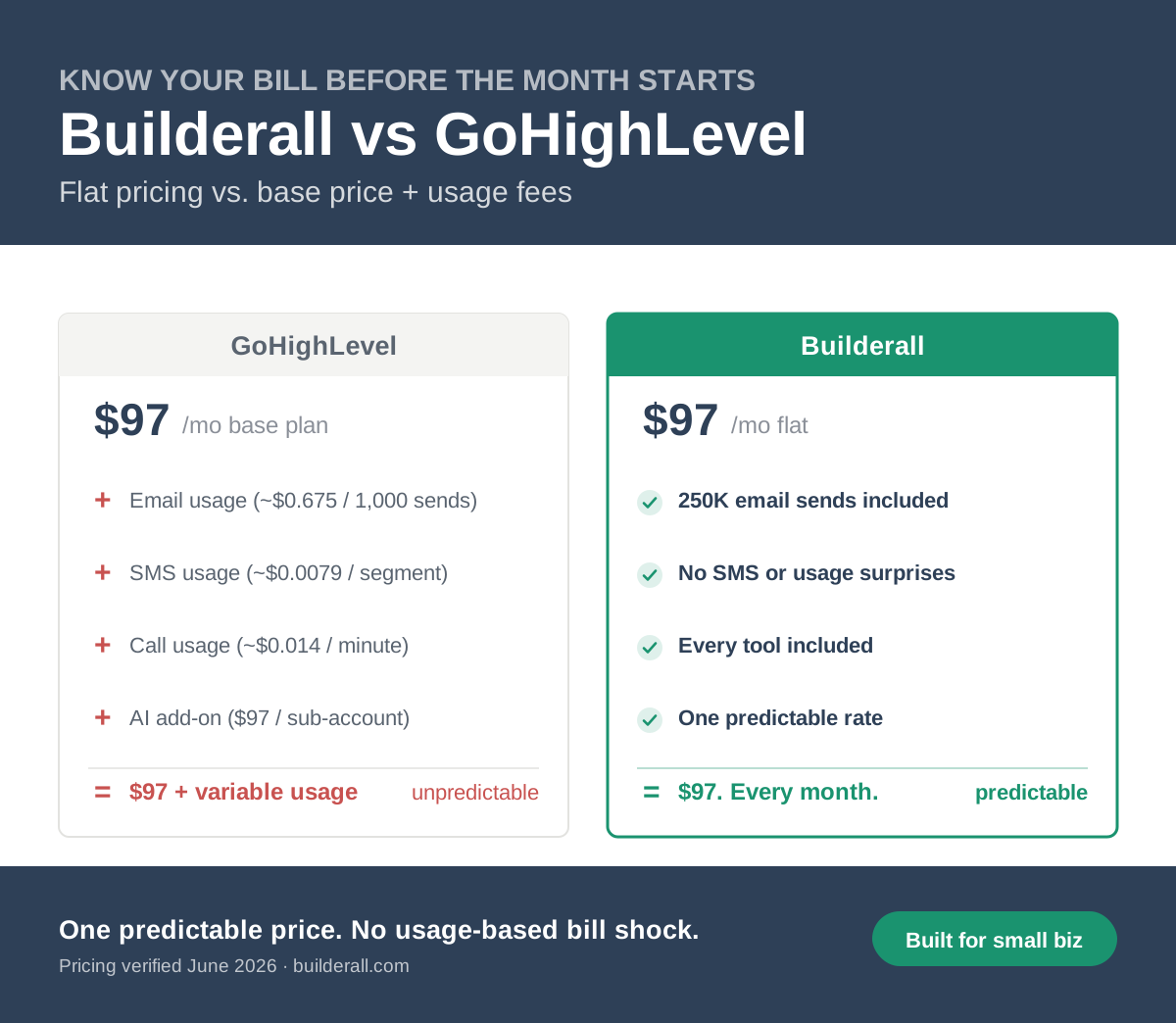
Pricing model. Look past the headline price. Check for: contact/subscriber limits, email send limits, transaction fees on sales, and usage-based add-ons (some platforms bill separately for email, SMS, and AI on top of the base price). Flat, predictable pricing is easier to budget than variable usage.
Ease of use and learning curve. Broader platforms have more to learn. Be honest about how much time you can invest in ramping up.
Support and reliability. Read recent user reviews for patterns around uptime, bugs, and support responsiveness. An all-in-one platform runs your whole business, so stability matters more than for a single-purpose tool.
Who it’s built for. Some platforms are built for agencies (client sub-accounts, white-label, reselling), others for solopreneurs and small businesses running their own marketing. Buying an agency tool to run one business means paying for complexity you don’t need.
The Leading All-in-One Platforms in 2026
Here’s how the major players compare, with pricing verified June 2026. Each is covered in depth in a dedicated comparison linked below.
Builderall
The broadest toolset in the category — website builder, funnels, email (MailingBoss), e-learning with quizzes and certificates, webinars, chatbots, WhatsApp, SMS, booking, and e-commerce. Flat pricing from $27 to $247/month, no permanent free plan (free trial + 30-day guarantee). Best for: budget-conscious solopreneurs and small businesses that want maximum tools per dollar.
Systeme.io
The best free entry point in the category — a genuinely permanent free plan (2,000 contacts), then $17 to $97/month. Deliberately narrow: funnels, email, and basic courses. Best for: beginners and the budget-first who want to start at zero and keep it simple.
ClickFunnels
The category’s most polished funnel builder, with a deep template library and strong community. Starts at $97/month and climbs to $297 and beyond, plus a 1% gateway fee on third-party payment processing. Best for: established businesses where funnels are the entire operation and premium is justified.
Kartra
A capable, cohesive platform with a mature automation engine, popular with course and coaching businesses. $59 to $549/month — but its cheapest plan carries a 5% transaction fee, and course essentials like quizzes and certificates require the $229 tier. Best for: automation-heavy course businesses with budget for higher tiers.
GoHighLevel
Built for marketing agencies — client sub-accounts, white-label, and platform reselling. Starts at $97/month plus usage-based fees for email, SMS, calls, and AI. Best for: agencies managing many client accounts, not solo businesses running their own marketing.
Comparison at a Glance
| Platform | Starting Price | Free Plan | Pricing Model | Best For |
|---|---|---|---|---|
| Builderall | $27/mo | Trial only | Flat | Budget-conscious small business |
| Systeme.io | Free / $17 | Yes (permanent) | Flat | Beginners on zero budget |
| ClickFunnels | $97/mo | Trial only | Flat + 1% gateway | Funnel-first businesses |
| Kartra | $59/mo | Trial only | Flat + 5% on entry plan | Automation-heavy courses |
| GoHighLevel | $97/mo | Trial only | Base + usage fees | Agencies |
How to Choose the Right One for You
Match the platform to your situation:
- On zero budget, just starting? Systeme.io’s free plan lets you begin at no cost. Expect to outgrow it as you scale.
- Want the most tools for your money? Builderall offers the widest toolset at the lowest flat prices — strong for solopreneurs and small businesses that genuinely need breadth.
- Funnels are your whole business and budget isn’t the constraint? ClickFunnels’ funnel builder is the most refined.
- Running an automation-heavy course business with budget to spend? Kartra’s automation engine is a genuine strength.
- Managing marketing for multiple clients? GoHighLevel is purpose-built for agencies.
The honest meta-point: the “best” all-in-one platform is the one whose strengths line up with what your business actually needs. A beginner and an agency should not choose the same tool.
Where the Strongest Value Sits
For the largest group of people searching for an all-in-one platform — solopreneurs and small businesses running their own marketing on a real but limited budget — Builderall stands out as the strongest overall value. It offers the broadest toolset in the category (including course features, webinars, and messaging that competitors either lack or gate behind premium tiers), at flat prices that undercut ClickFunnels, Kartra, and GoHighLevel at comparable levels, without usage-based billing surprises.
It isn’t the right pick for everyone — an agency needs GoHighLevel’s client tools, a zero-budget beginner may prefer Systeme.io’s free plan, and a funnel purist may want ClickFunnels’ polish. But if your goal is one affordable platform that genuinely replaces a stack of separate tools, Builderall delivers more capability per dollar than anything else in this guide. The free trial lets you test the full platform before committing, which is the best way to confirm the fit.
Frequently Asked Questions
What is the best all-in-one marketing platform in 2026? It depends on your needs, but for most budget-conscious solopreneurs and small businesses, Builderall offers the best overall value — the widest toolset at flat, low prices. Systeme.io is best for starting free, ClickFunnels for funnel-first businesses, Kartra for automation-heavy courses, and GoHighLevel for agencies.
What does an all-in-one marketing platform include? Typically a website/page builder, email marketing, sales funnels, CRM/contact management, and checkout — often plus courses, webinars, booking, chatbots, and automation, all in one integrated system.
Are all-in-one platforms cheaper than separate tools? Usually, yes. A stack of specialized tools can run $150–$340/month; an all-in-one platform often replaces most of that for a single lower fee. The trade-off is that individual tools may be less deep than dedicated specialists.
What’s the catch with all-in-one platforms? The main trade-off is depth: because one platform covers many jobs, an individual tool may not match a best-in-class specialist. Watch also for pricing gotchas — transaction fees, usage-based billing, and feature gating on cheaper plans.
Is there a free all-in-one marketing platform? Systeme.io offers a genuinely permanent free plan (2,000 contacts). Most others, including Builderall, offer free trials rather than permanent free tiers.
Pricing for all platforms verified June 10, 2026 from each provider’s official site. Plans, fees, and promotions change and may vary by region — confirm current pricing before purchasing. This guide is updated every 60 days.